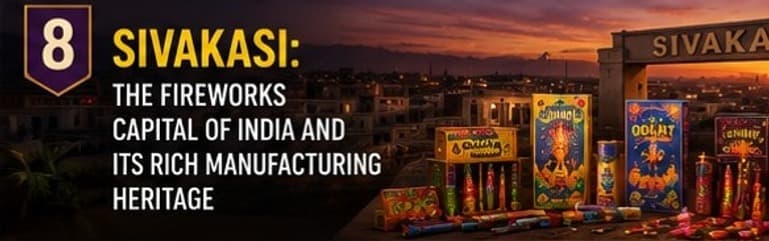
Sivakasi: The Fireworks Capital of India and Its Rich Manufacturing Heritage
Sivakasi in Tamil Nadu produces over 90% of India's fireworks. Discover the history, scale, and craftsmanship behind this remarkable town that lights up the entire nation every Diwali.
A Town That Lights the Nation
Every sparkler, every sky shot, and every chakkar enjoyed across India during Diwali most likely originated in one small town in southern Tamil Nadu — Sivakasi. Located in the Virudhunagar district, Sivakasi is responsible for producing more than 90% of India's fireworks and accounts for a substantial portion of the country's safety match production as well.
With a population of around 75,000, Sivakasi punches far above its weight in industrial output. The town has earned its nickname — "the fireworks capital of India" — through generations of craft, enterprise, and a workforce that has refined the art of pyrotechnic manufacturing to a high degree of skill.
The Origins of Sivakasi's Fireworks Industry
The fireworks industry in Sivakasi dates back to the early 20th century. P. Ayya Nadar and his brother Shanmuga Nadar are widely credited with founding the industry after travelling to Kolkata to learn the craft of match-making and importing pyrotechnic knowledge to their hometown in the 1920s.
The dry climate of the region — with low humidity and abundant sunshine — proved ideal for manufacturing and drying pyrotechnic compositions. By the 1940s, Sivakasi had established itself as a significant manufacturing centre, and the industry grew rapidly through the decades that followed.
What Is Made in Sivakasi
The range of products coming out of Sivakasi is extraordinary:
- Ground crackers — Chakkars, flower pots, and snake tablets
- Sound crackers — Atom bombs, bijili, and string crackers
- Aerial shells — Sky shots, rockets, and coloured burst shells
- Sparklers — In every type, size, and colour
- Fancy novelties — Including colour-changing effects and themed designs
The manufacturing units range from large registered factories to small licensed workshops. Each unit specialises in specific product types, and there is an intricate supply chain within the town connecting raw material suppliers, chemical mixers, case makers, and assembly workers.
Scale of the Industry
The numbers are staggering. Sivakasi's fireworks sector employs an estimated 300,000 to 500,000 workers directly and indirectly. During the months leading up to Diwali — typically August through October — the factories run at near full capacity to meet demand from across the country and export markets.
The industry generates thousands of crores in revenue each year and contributes significantly to the local economy of the Virudhunagar district. Worker wages, training, and welfare programmes have improved considerably over the years as the industry has matured.
Safety Standards and Regulation
The fireworks industry in Sivakasi is regulated by the Petroleum and Explosives Safety Organisation (PESO), which issues licences and conducts inspections. Manufacturers must comply with strict guidelines on chemical composition, product labelling, and storage conditions.
The industry has worked to improve safety standards through collective associations like the Indian Pyrotechnics Manufacturers Association (IPMA). Modern factories invest in protective equipment, proper ventilation, and training programmes for workers.
Why Sivakasi Matters to Every Diwali Celebration
When you buy crackers for Diwali, you are participating in a chain that touches the lives of hundreds of thousands of families in and around Sivakasi. The town's artisans bring skill and care to every product. Understanding where crackers come from adds a layer of appreciation to the celebration — and reinforces why buying from licensed sellers who source from certified manufacturers matters for the wellbeing of the entire industry.